CLOTHING KNOWLEDGE · DENIM KNOWLEDGE
Denim Selection: Rise, Stretch & Shrinkage
Understand the measurements that shape jeans, the differences between raw, preshrunk and selvedge denim, and the limits of a familiar waist label.
- Main dimensions
- Waist, rise, thigh and inseam
- Fabric questions
- Stretch and recovery
- Finishing terms
- Raw, preshrunk and selvedge
- Useful for
- Jeans and denim jackets
The key idea
Compare jeans as a complete shape. The waist label, rise, inseam, leg opening and stated fabric behaviour each explain a different part of the fit.
Using the photo reference
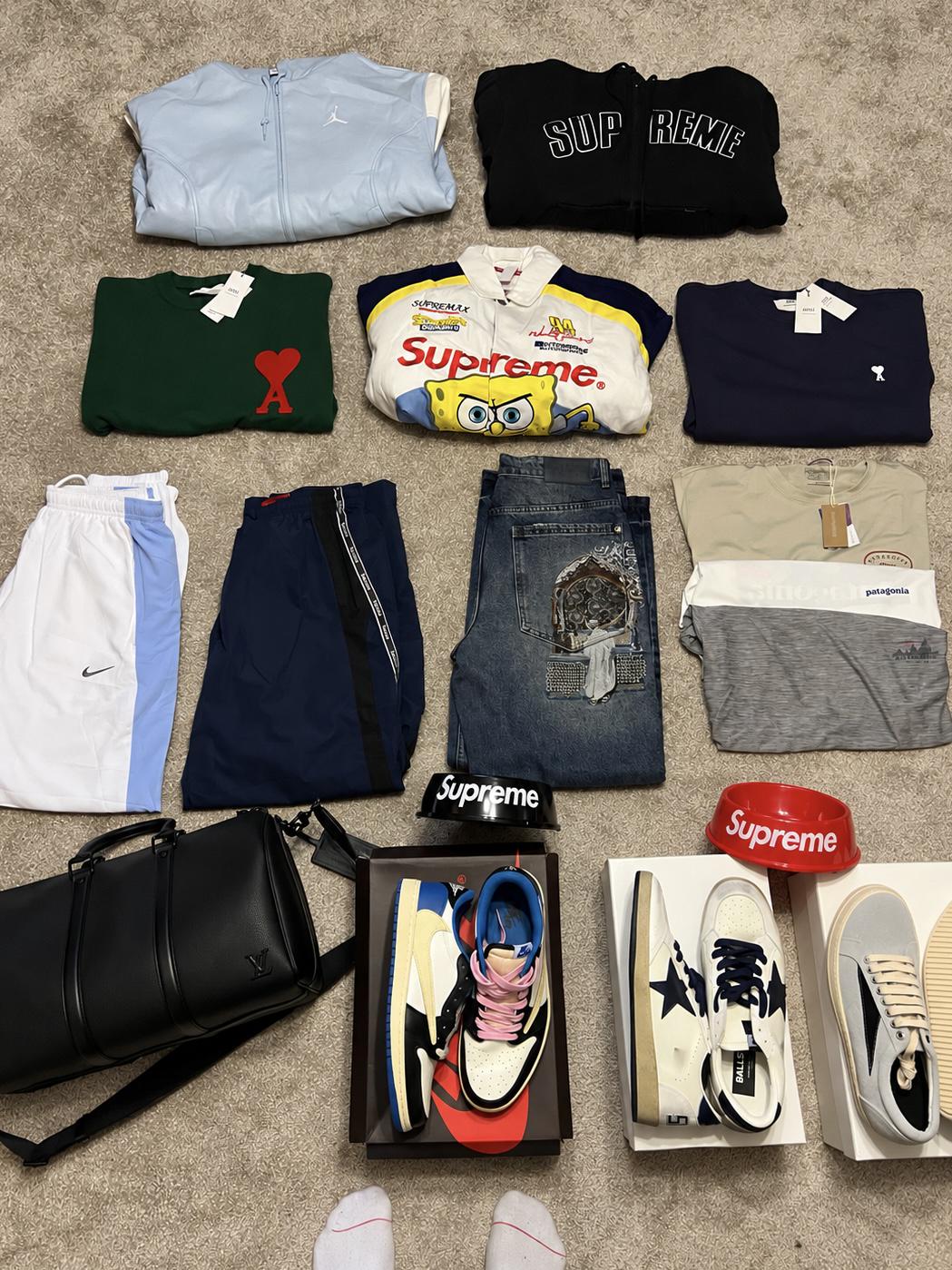
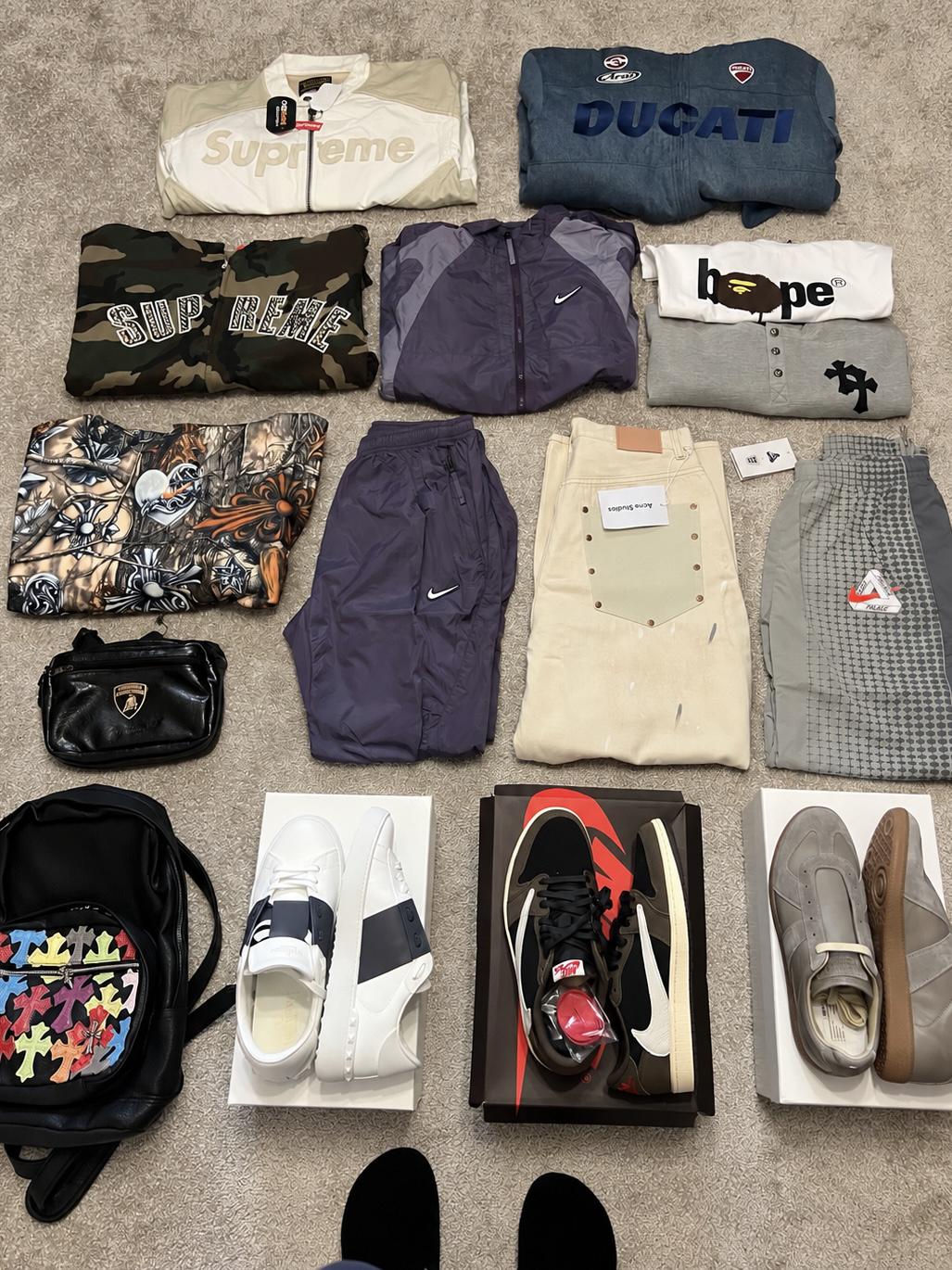
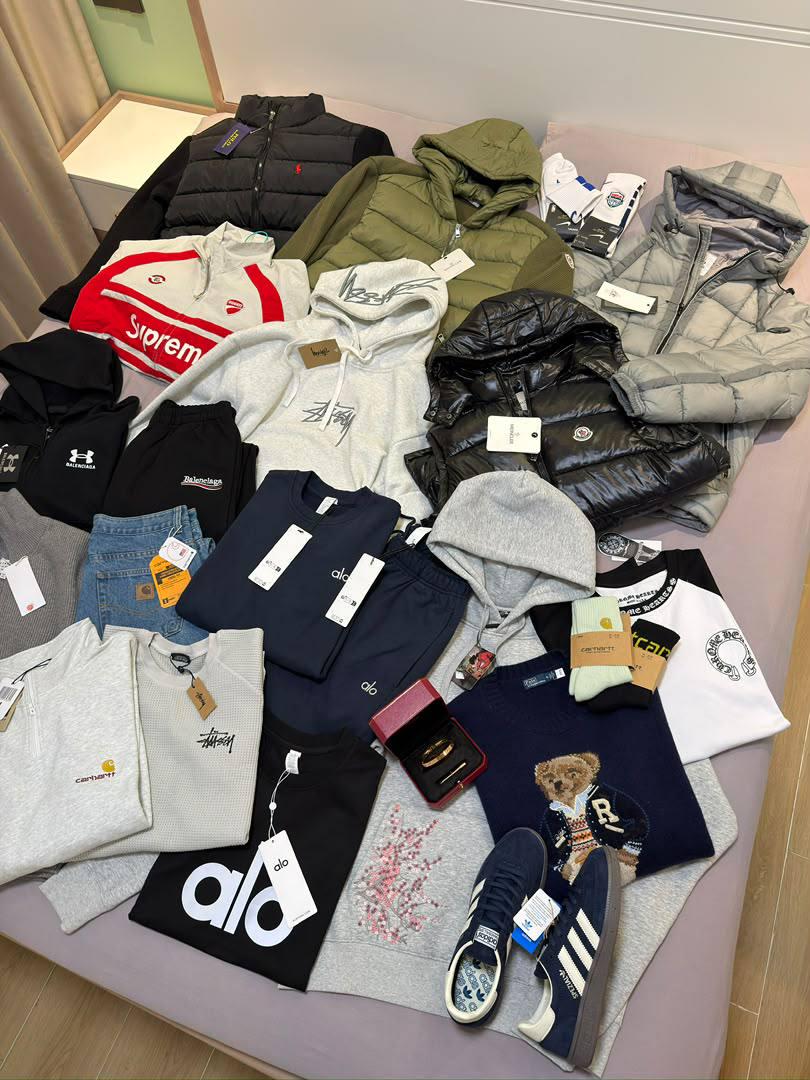
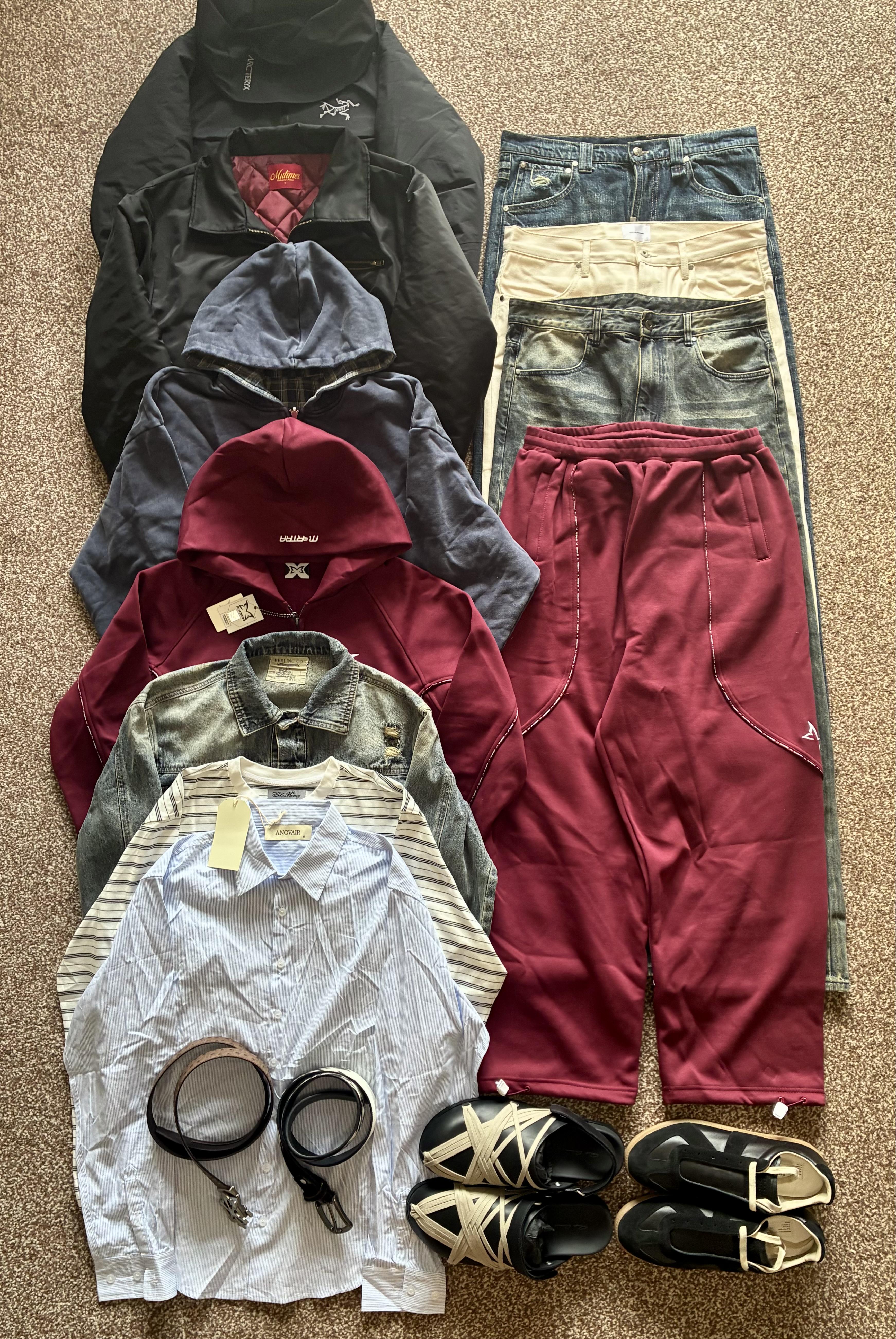
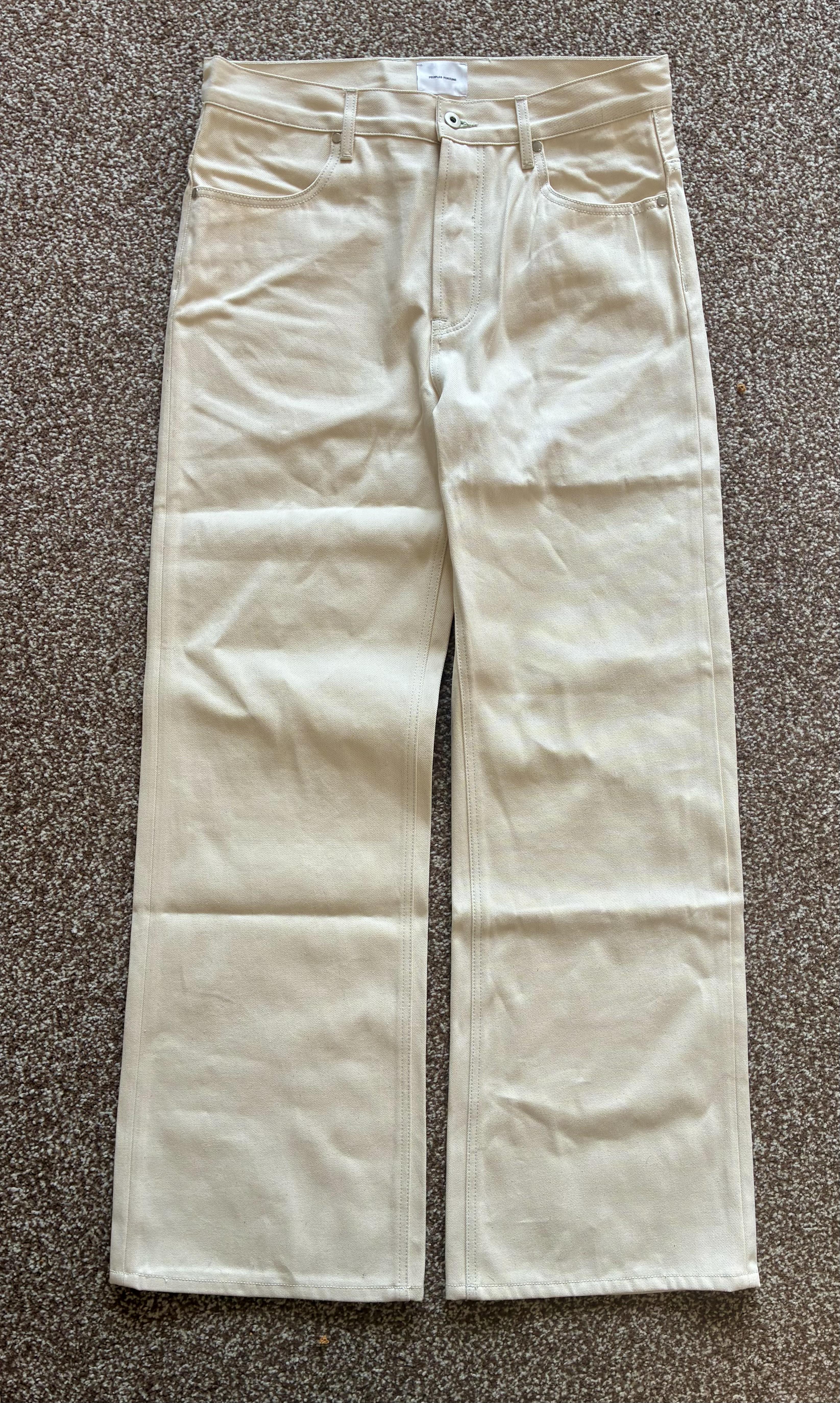
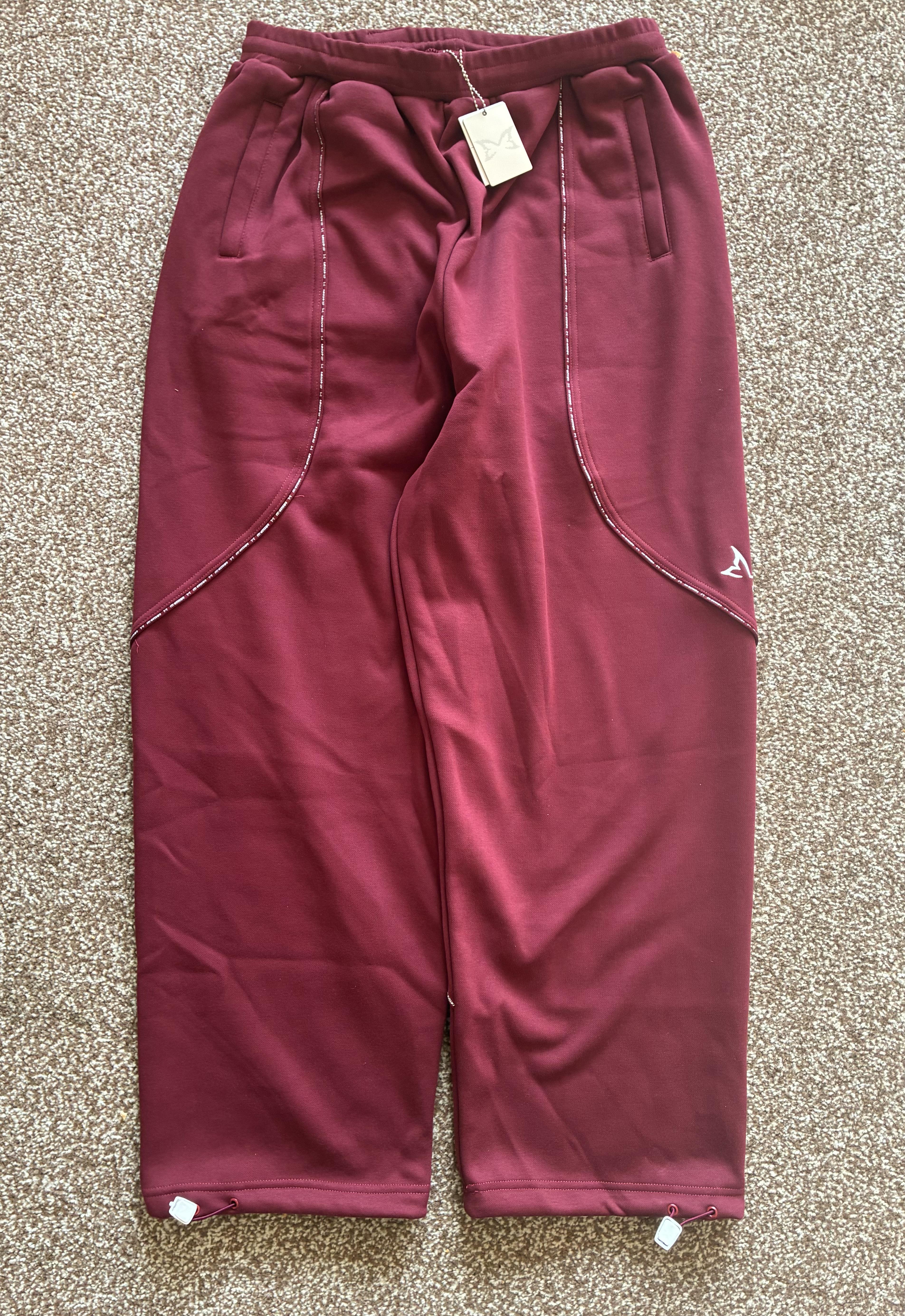
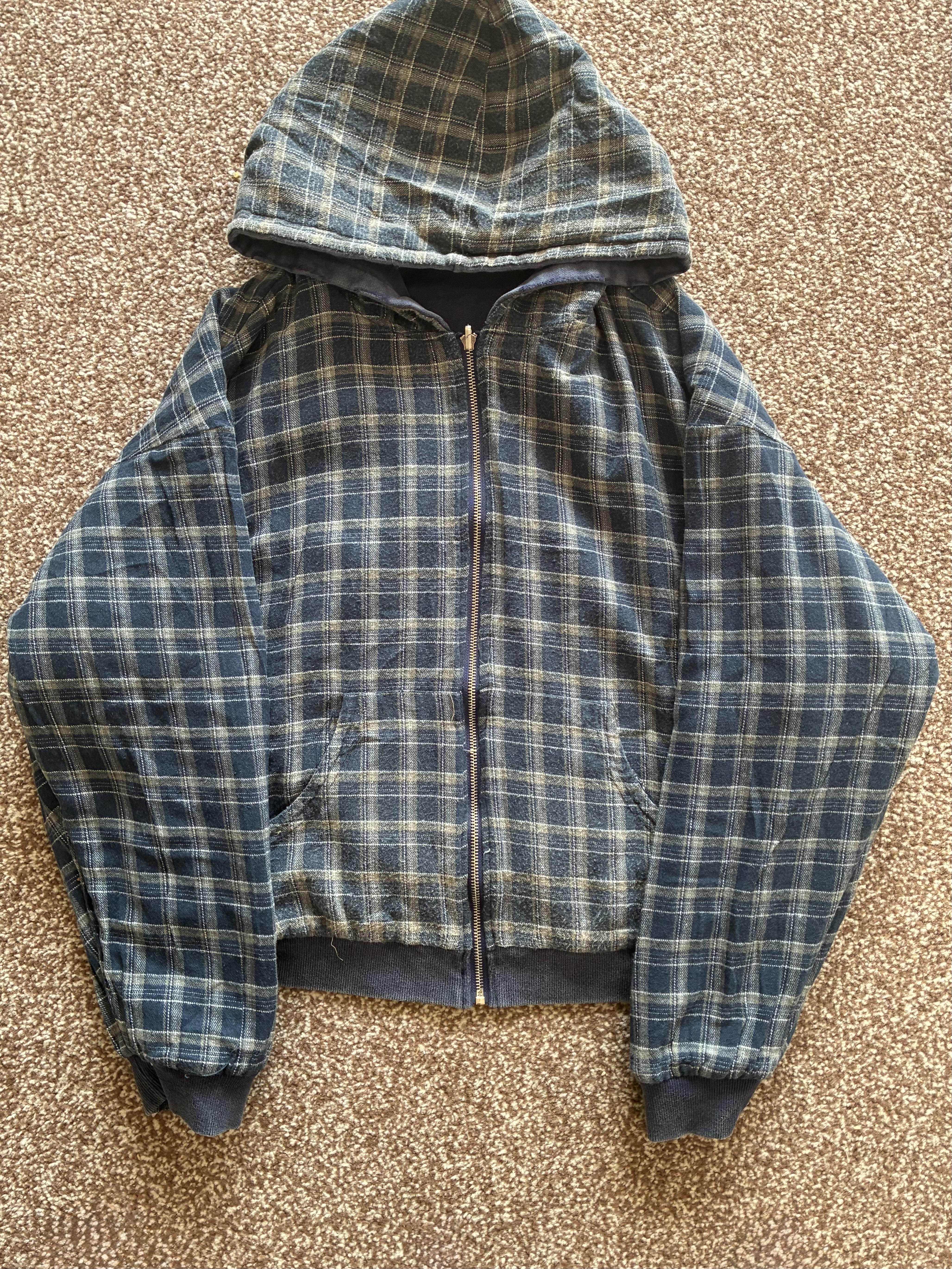
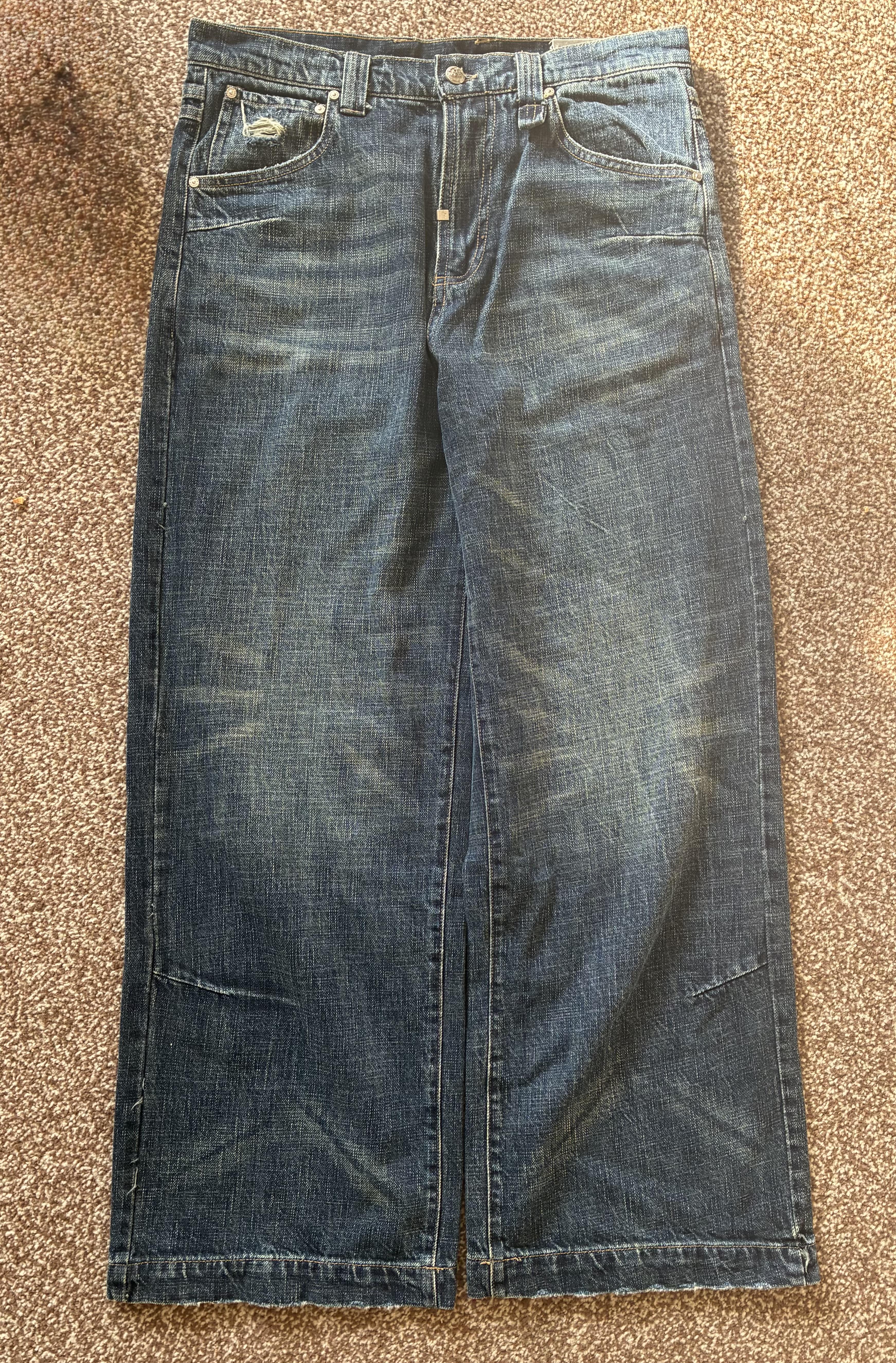
Use the gallery to compare jacket-to-trouser proportions, denim shapes and how hems meet footwear. The photographs do not establish whether a pair is raw, preshrunk or stretch denim. Confirm those specifications for the exact listing you select.
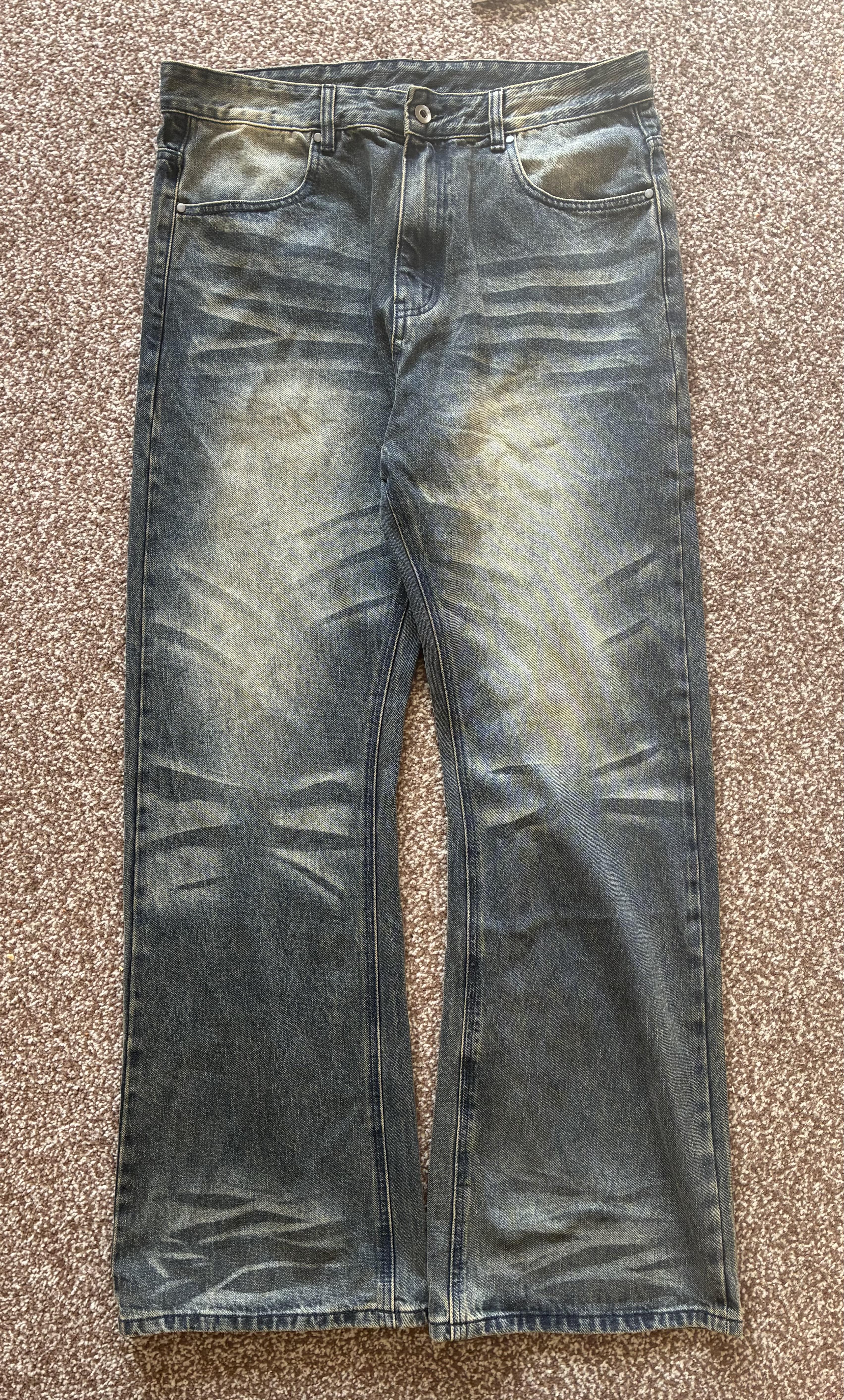
01 / CLOTHING NOTES
Waist size and rise describe different things
The waist indicates size around the waistband; rise describes the distance from the crotch seam toward the top of the waistband. Changing the rise changes where that waistband sits. Pairs that fasten at different levels on the body are not directly comparable using a single body-waist measurement.
When using an existing pair as a reference, record where you wear it and how it feels seated as well as standing. A waistband that closes does not answer whether the rise or seat is comfortable. Keep those observations with the measurements.
02 / CLOTHING NOTES
Inseam, thigh and leg opening
Inseam runs along the inside leg from the crotch to the hem. It explains length, while the thigh, knee and leg opening describe the shape along that length. Straight, tapered and flared cuts distribute width differently, so an identical waist and inseam can still produce a different outline.
Compare a pair you wear with the shoes intended for the new jeans. A narrow opening may sit above a bulky shoe while a wider hem falls around it. Decide whether you want a clear ankle, a small break or deliberate stacking before choosing between lengths. This is a styling choice, not a universal correct length.
03 / CLOTHING NOTES
Stretch and recovery
Stretch describes how fabric extends; recovery describes how it returns toward its previous shape. An elastane-containing blend and a non-stretch construction can feel different, but a fibre percentage alone does not quantify the full wearing experience. Some cotton fabrics also gain mechanical stretch through their construction and finishing.
Ask for the exact specification rather than assuming similar percentages mean identical behaviour. If trying a pair on, bend and sit, then observe the waist and knee areas after movement. Do not rely on an uncomfortable pair becoming perfect later; expected changes during wear belong to that specific fabric.
04 / CLOTHING NOTES
Raw, preshrunk and selvedge denim
Raw refers to denim that has not received the usual washing or distressing treatment. Preshrunk, often called sanforized, describes processing intended to reduce later shrinkage. Selvedge describes the self-finished fabric edge associated with narrow shuttle-loom weaving. These words refer to different aspects of the material.
A selvedge edge does not tell you the rise, stretch or expected dimensional change. Nor should shrink-to-fit sizing instructions be applied to every dark, stiff-looking pair. Read the specification for the exact wash and item; colour names and gallery appearances leave those manufacturing details unresolved.
05 / CLOTHING NOTES
Shrinkage information and the final length
Before choosing a size or altering a hem, establish whether the dimensions are given before or after the intended washing process. Use the stated care method and any product-specific shrinkage information. There is no single percentage to subtract from every pair, and extra heat is not a precise tailoring method.
Record the listed dimensions, measuring method and expected care routine together. If details are missing, leave that uncertainty visible instead of filling it with a rule from another review. This is useful when comparing different washes or a denim jacket with a pair of jeans.
Before comparing a pants spreadsheet shortlist, distinguish body and garment measurements. The same waist label can describe different rises and leg shapes, so retain the actual measurement method, the selected length and any stated wash history.
Denim terms and what they describe
| Term | Main meaning | Separate information to request |
|---|---|---|
| Rise | Where the waistband sits relative to the crotch | Waist, seat and intended wearing position |
| Inseam | Inside-leg length | Thigh, knee and leg-opening dimensions |
| Raw or preshrunk | Wash state or shrink-control processing | Product-specific care and expected dimensional change |
| Selvedge | A self-finished fabric edge | Composition, stretch, fit and finishing |
COMMON MISCONCEPTIONS
Three assumptions worth checking
“All jeans in my waist size fit the same.”
Rise, seat and leg shape remain separate variables. Compare where your usual jeans feel comfortable or restrictive, not just the label that lets the waistband close.
“Selvedge guarantees a better fit.”
An edge construction cannot predict how a pattern sits on your body. Assess fit using dimensions and a try-on where possible.
“Every pair needs the same size-up allowance.”
Shrinkage and fabric behaviour belong to the product and care method. Follow the item’s information rather than transferring a raw-denim rule to a different construction.